One of the few benefits from growing up in the northern parts of Sweden is that you’re forced to learn not to let a little snow get in the way of fun. After spending countless hours maintaining my own fleet of electric scooters, as well as helping friends and customers survive the harsh Scandinavian winters. I’d like to think I know a thing or two about keeping a scooter in mint condition through the cold season.
If you’re a fellow vitamin D deficient rider who still wanna keep on riding your scooter through the winter season. Then this guide to electric scooter winter maintenance and care is going to be your best friend the coming dark months, because these riding conditions present a whole new set of problems that we don’t cover in our regular maintenance guide.
But before you get out there on those snowy and icy roads, you want to make sure that your scooter can handle the weather, if you need help we got a list of great electric scooters you can ride all year-round.
Weekly Check-up Routine
Winter maintenance is focused on small consistent sessions of cleaning, especially after a ride. It is all about keeping your scooter in great condition when it is being constantly bombarded with snow, water, and its arch nemesis, salt. That’s why you should always wipe it down and inspect it after every ride.
Key Areas To Inspect
Here’s my go-to list of key areas to inspect after each and every ride:
- Undercarriage
- Deck
- Battery Compartment
- Wheels
- Joints
- Display
- Folding Mechanism
- Brakes
Protective Coating To Protect Against Winters Worst

Use a protective coating like Muc-Off Bike Protector or similar after every deep clean you’ve done. This adds a layer of water resistance to your ride by adding a shiny wax film on top of it, but it also helps keep dirt and snow from building up and makes our cleaning life a heck of a lot easier.
Quick Wipe-Down
The wipe-down needs to be thorough but it doesn’t have to be all that time-consuming if you’ve got the right set of gear. A couple of microfiber cloths will get you a long way with just wiping off all the water. Focus on the areas listed above. This 5 minute task alone can save you a lot of headaches in the future.
For ease, keep your rags somewhere close to where you park your scooter. Remember to have different rags for different areas, you don’t want that brake or wheel dust all over your deck.
Ice/Snow Buildup
Go over your scooter and look for ice and snow buildup, gently remove any findings. Getting rid of it can greatly reduce the risk for water penetration or corrosion on both the scooter itself, but also vital parts like its brakes.
Winter Enemy #1 – Road Salt
This time of the year salt is your scooter’s worst enemy. You will want to keep a separate cloth for a final salt removing wipe-down. Make a salt cleaning cocktail consisting of 1 part vinegar and 3 parts water, dampen the cloth and hit the exposed areas with a gentle rub. This ensures we get that salt away before it can start its corrosive work.
Best Tools and Cleaning Products To Keep Your Scooter Shining
You don’t need all these in your arsenal, but depending on your area you’ll want at least a few select items. They’ll help a lot with keeping your scooter rust and penetration proof until better weather returns in spring.
For cleaning products, you’ll want:
- A gentle cleaner that won’t remove protective coating (For this use our cheap recipe above using vinegar and water)
- Silicone-based protectant spray (I use Muc-Off Bike Protector)
- Marine-grade anti-corrosion spray
- Brake cleaner
- 5-56 Spray (A given in any old mechanic’s arsenal)
Tools you’ll want at your disposal:
- Several microfiber cloths
- Small flashlight (If your garage lighting is as useless as mine)
- Compressor or canned air
Winter Battery Best Care Practices
One of the most critical components of winter riding is good battery care. Your battery is one of those parts that will take a heavy beating for low temperature, and they’re also one of the most expensive parts on your ride. Luckily, doing so doesn’t involve a ton of work, unless you’re riding in really cold environments, then you might want to consider insulating the battery compartment. Something we tell you more about in our electric scooter winterizing guide.

The optimal battery temperatures are around 50-68°F (10-20°C), this is the temperature you want to store it at when not in use or while charging.
Having the battery drop down further won’t really hurt it, but it will make it feel very sluggish and once the battery’s operating temperature drops down below 32°F (0°C) you can expect to see a 20-40% decrease in range capacity. So we don’t want to leave it out in the cold for too long if we’re doing stops along our daily commute.
It isn’t until we reach both low battery levels and at least an internal 26°F (-3°C) that we will start to experience an expedited battery deterioration process.
If you put it away for a little while, remember to keep the charge at 50-60%.
Long-Term Winter Storage
For long-term storage you want to keep your battery level at around 50-60% charge. Too low charge will start the battery deterioration process, too high will also expedite it, and our entire goal is to avoid that. This is one of the big impact factors we talk a lot about in our article on e-scooter range optimization.
Preparation steps before hibernation
- Give it a thorough wipe-down.
- Charge the battery to 50-60%.
- Store in a safe place with a temperature around 0-68°F (10-20°C).
Monthly maintenance during storage
I recommend that you start it up once a month or every two months and run the motors for a short while. This lets the battery circulate and helps it stay fresh during long seasonal storage.
Keep tabs on the battery level, if it falls below 40%, give it a short top-up to make sure it stays within the optimal range of 50-60%.
Common Winter Issues and How to Fix Them
Now you know what to do to keep your ride in mint condition during your winter rides. But sometimes lady isn’t on our side no matter the care we put into keeping our electric scooter clean and operational.
Here are the most common questions I’ve gotten from fellow snow riders out there throughout the years, and of course how you solve them.
Reduced range capacity or slow speed
If your scooter feels sluggish while riding in the winter it is probably because the battery isn’t heated up enough. Just like you move slower when you’re cold, so does electricity. A cold battery will have a heightened internal resistance making it harder for the battery to maintain or reach its optimal power output. At certain low temperature levels you can also expect a decrease in range by about 20-40%.
Solution: Make sure to store your scooter in a well-tempered room when not in use, this will help it reach a good operating temperature, and keep it as you hit the icy roads. If this doesn’t help, I suggest that you insulate the battery compartment in order to aid the battery’s own heat production.
Ineffective braking
First of all we want to make sure that the issue isn’t caused by slippage due to bad tires or inaccurate tire pressure. If that isn’t the case then you have to look at your brake system, drum brakes don’t get affected by weather conditions, but disc brakes will generally have a 20%ish reduced effectiveness.
Solution: There isn’t a ton we can do about the lack of braking power except making sure the disc and brake pads are clean and staying on top of brake maintenance. Go over the brake lines to make sure they’re not frozen.
Throttle stopped working
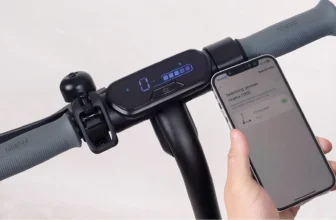
A lot of scooters, especially the Xiaomi m365 look-alike models with center mounted displays are prone to getting water or snow into the display. If the scooter starts up just fine but doesn’t want to move. Your throttle has likely been fried. Happened once to my Segway E2 Pro and multiple times on my old m365 before I got a display cover.
Solution: Exchange the throttle for a new one and it will run as new. Remember to add some extra silicone as you reattach things, this will help you avoid the same issue in the future. If available I would highly consider getting a silicone screen protector.
Summarizing Your Winter Maintenance
Key take-away from my guide should be to just use your common sense. Don’t store your electric scooter away with a 1″ layer of snow. Snow melts and water and electric and metal components are not best friends, especially if its mixed with road salt.
Keeping your scooter clean and being pro-active with water protection is the best thing you can do to make sure your winter riding dreams don’t get crushed. Other than that you’ll continue your year-round maintenance checking of brakes, motors and screws to make sure everything is tight and rust free, moving with ease.
Now you’re equipped with the knowledge you need to make sure your scooter rides just as well when spring hits as it did when winter arrived. Get out there and push through some powder!